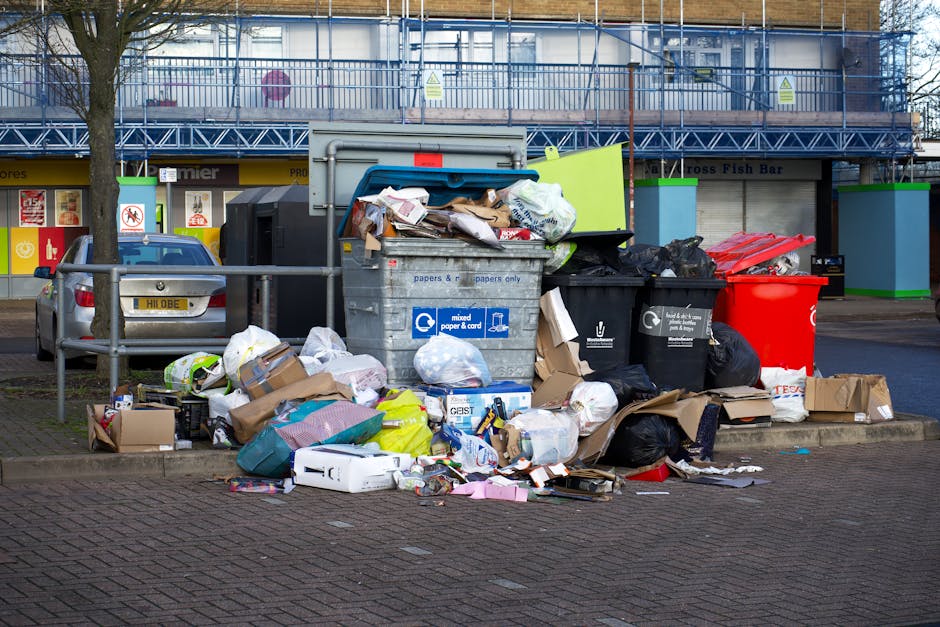
What Croydon Council Allows: Addiscombe Bulky Waste Rules
If you live in Addiscombe, bulky waste is one of those jobs that sounds simple until you actually start doing it. One sofa becomes two chairs, then an old mattress, then a broken wardrobe you've been meaning to deal with for ages. Suddenly you're trying to work out what Croydon Council allows, what it won't take, and whether you need a council collection or a different kind of clearance altogether. This guide breaks down What Croydon Council Allows: Addiscombe Bulky Waste Rules in plain English, so you can make a sensible decision without guessing.
You'll find a clear explanation of how bulky collections usually work, what tends to be accepted, what often causes problems, and when a private clearance service may be the more practical route. Truth be told, most people just want the items gone without drama. Fair enough.
Table of Contents
- Why What Croydon Council Allows: Addiscombe Bulky Waste Rules Matters
- How What Croydon Council Allows: Addiscombe Bulky Waste Rules Works
- Key Benefits and Practical Advantages
- Who This Is For and When It Makes Sense
- Step-by-Step Guidance
- Expert Tips for Better Results
- Common Mistakes to Avoid
- Tools, Resources and Recommendations
- Law, Compliance, Standards, or Best Practice
- Options, Methods, or Comparison Table
- Case Study or Real-World Example
- Practical Checklist
- Conclusion
- Frequently Asked Questions
Why What Croydon Council Allows: Addiscombe Bulky Waste Rules Matters
Bulky waste rules matter because not every large item can be left out, booked in, or bundled together in the same way. Councils usually apply conditions around size, weight, item type, access, and whether the waste can be safely handled by a collection crew. If you assume all big items count as "bulky waste," you can end up with refused collections, wasted time, or a missed pickup that leaves a hallway full of furniture for another week. Nobody wants that.
In Addiscombe, the main issue is usually space and practicality. Flats, terraced homes, converted properties, and shared entrances can all make collection arrangements a bit fiddly. A bulky item on its own is one thing. Three heavy items down two flights of stairs, across a narrow landing, and through a tight pavement gate is another. The rules exist to keep things safe and manageable.
There's also a cost angle. If you know what Croydon Council allows, you can avoid booking the wrong kind of collection or paying for a service you do not actually need. On the other hand, if the council won't take your items, a private service can save you from the classic "I'll sort it at the weekend" spiral that tends to last three weeks.
How What Croydon Council Allows: Addiscombe Bulky Waste Rules Works
At a practical level, bulky waste rules are about matching the item to the right collection method. Councils typically separate routine household rubbish from large household items such as old furniture, mattresses, and white goods. But the details matter. Some items may be accepted only if they are presented in a certain way, while others may be excluded entirely because of safety, contamination, or specialist disposal needs.
The process often starts with identifying what you have. Is it furniture, electrical equipment, garden debris, renovation waste, or a mixture of everything? That distinction makes a real difference. A single sofa is very different from a dismantled wardrobe mixed with paint tins, rubble, and an old fridge. The latter can become a mixed-waste job, not a standard bulky collection.
In many homes, the simplest way to think about it is this: if an item is large, domestic, and still reasonably safe to move, it may fit within bulky waste rules. If it is hazardous, heavily contaminated, built-in, or the wrong type of waste entirely, it probably does not. That sounds obvious, but when you're standing in a garage at 7pm surrounded by bits of broken furniture, the distinction is not always crystal clear.
If you need a broader clearance rather than a single-item collection, services such as house clearance, home clearance, or flat clearance can be a better fit than trying to force everything into a council bulky slot.
Key Benefits and Practical Advantages
Understanding the rules gives you more control. Simple as that. You can decide whether a council collection is enough or whether you need a faster, more flexible solution. That means less guesswork, fewer delays, and fewer awkward moments when a collection crew turns up and can't take half of what's been left out.
There are also environmental benefits. Bulky items are often reusable, recyclable, or at least separable into material streams. A well-handled collection reduces the chance that everything ends up treated as general rubbish. For many households, that matters just as much as convenience. People like knowing a usable item has been passed on or broken down properly, especially when they've spent years living with it.
Another benefit is safety. Heavy items moved incorrectly can damage walls, bannisters, floors, and backs. That sounds dramatic, but it really happens. A rushed lift of a wardrobe down a narrow staircase is exactly the kind of thing that ends in a chipped wall and a sore shoulder. Not ideal, to put it mildly.
- Clearer planning: you know what can be booked and what needs a different approach.
- Fewer refusals: less chance of rejected items on collection day.
- Better value: you avoid paying for the wrong service.
- Safer handling: fewer DIY moving risks.
- Smoother disposal: easier separation of reusable, recyclable, and non-acceptance items.
Who This Is For and When It Makes Sense
This topic is relevant to anyone in Addiscombe dealing with one or two awkwardly large items, but it becomes especially useful when you are clearing a property, moving home, or trying to reclaim space after a long build-up of clutter. Sometimes the trigger is a life event: a tenancy ending, a family move, an office refit, or a relative downsizing. Sometimes it is more mundane. You finally notice the broken treadmill in the spare room has become a coat rack, and the garage has quietly become a storage unit for things you no longer recognise.
It makes sense for:
- homeowners clearing a few large items
- landlords preparing a property between tenancies
- tenants leaving furniture behind or needing a quick tidy-up
- families sorting an inherited property
- people who cannot move heavy items themselves
- small businesses replacing office furniture or clearing storage
If the job includes office chairs, desks, filing cabinets, or general business clutter, a dedicated office clearance or business waste removal option can be more suitable than a standard household bulky collection. And if the items are mostly furniture, using a service focused on furniture clearance or furniture disposal may be the cleaner route.
Step-by-Step Guidance
If you want to deal with bulky waste without the usual faff, use a simple process. It saves time and helps you avoid the little errors that always seem to happen when you're in a rush.
- List every item
Write down exactly what needs removing. Be specific. "Old furniture" is too vague; "double mattress, two dining chairs, broken chest of drawers" is much better. - Separate bulky waste from other waste
Keep furniture, electricals, garden waste, builders' materials, and general rubbish apart. Mixed loads can trigger different handling requirements. - Check whether anything is specialist waste
Paint, chemicals, batteries, gas cylinders, and some electrical items can fall into categories that need special treatment. - Measure the largest items
Doorways, stair turns, lift access, and hallway width all matter. A sofa that fits in theory can still be a nightmare in practice. - Decide whether council collection is enough
If the load is small and straightforward, a council service may do the trick. If it's bulky, mixed, urgent, or awkward to access, a clearance service may be easier. - Prepare the items safely
Remove loose contents, tape drawers shut if needed, and clear a path to the door. A tidy route makes the collection smoother. - Book in advance and confirm the details
Double-check what is being taken, where it is located, and any access restrictions. A quick phone call or message can prevent a lot of nonsense later.
That last point is surprisingly important. A lot of collection problems are not about the waste itself; they're about access and communication. If you tell someone "it's just in the front room," but the item is actually in a basement flat with a tight stairwell, expectations can fall apart fast.
Expert Tips for Better Results
From a clearance perspective, the best outcomes usually come from preparation, honesty, and choosing the right service for the job. Here are a few things that tend to make a real difference.
Keep the load clean and separate. If you mix bulky waste with black bags, garden cuttings, and rubble, the collection becomes harder to classify and handle. A little sorting upfront saves hassle later.
Think in categories, not just items. For example, a broken wardrobe and a mattress are both bulky, but they may be handled differently from electrical items or builders' debris. If you're also clearing part of a garden, a dedicated garden clearance approach may be more appropriate for branches, planters, and outdoor junk.
Don't underestimate access issues. Narrow staircases, parking restrictions, and shared entrances can change the whole plan. In Addiscombe, that can matter more than people expect, especially in older buildings.
Be realistic about time. A "quick" clear-out often grows legs. One item becomes five. Then the loft hatch opens. You know how it goes. If the job has crept beyond a single bulky item, a broader service like loft clearance or garage clearance can save effort.
Expert summary: The smartest bulky waste jobs are the ones planned around the item type, access, and end destination. If you get those three right, the rest is usually straightforward.
Common Mistakes to Avoid
Let's face it, most bulky waste headaches come from a handful of repeat mistakes. The good news is they're easy enough to avoid once you know what to watch for.
- Leaving out items without checking acceptance - not every large item is automatically allowed.
- Mixing waste types together - furniture, appliances, and construction waste are not the same thing.
- Forgetting about access - a collection crew can only take what they can reach safely.
- Assuming everything is recyclable - some items are reusable, some recyclable, and some genuinely need specialist disposal.
- Waiting until the last minute - especially before a move-out date or a property inspection.
- Trying to move heavy items alone - this is where injuries and cracked skirting boards sneak in.
One quiet but common issue is overfilling a collection area. If you leave too much out, or place it where it blocks a communal path, you may create a nuisance for neighbours. In a flat or shared building, that can become a proper problem. Better to stage the waste neatly and keep walkways clear.
Tools, Resources and Recommendations
You do not need a van full of kit to handle bulky waste properly, but a few basic tools make the job easier and safer. A tape measure is genuinely useful here. So is a marker pen, some strong tape, and a basic pair of gloves. If you're moving lighter items around the property, furniture sliders or a sack truck can help, although you should only use equipment you can handle safely.
For most households, the most useful "resource" is a clear inventory. A quick written list or phone note keeps everyone on the same page. If you are arranging a property clear-out, you may also want to look at waste removal for mixed loads or builders waste clearance if the material includes refurbishment debris rather than household items.
When in doubt, ask yourself three questions:
- What exactly is the item?
- Can it be moved safely from where it is now?
- Does it need a specialist route rather than standard bulky collection?
If you answer those honestly, you'll avoid most of the typical problems. A bit boring, maybe. But effective.
Law, Compliance, Standards, or Best Practice
Bulky waste handling sits inside the wider UK framework around waste duty of care, safe handling, and responsible disposal. In plain terms, that means waste should be managed so it does not create avoidable risk, pollution, or fly-tipping. Householders are usually focused on getting things collected, but there is still an expectation to pass waste on to a legitimate and responsible collector.
Best practice is pretty straightforward: keep waste segregated where practical, present it safely, do not include hazardous items in normal collections unless the service expressly accepts them, and make sure the waste goes to a lawful disposal route. If you are using a clearance company, it is sensible to check how they work and what standards they follow. Pages such as insurance and safety, health and safety policy, and recycling and sustainability can give you a better feel for how a professional operator thinks about these jobs.
If you are a landlord, letting agent, or business owner, compliance matters even more. You may need faster turnaround, better documentation, or a more formal clearance process, especially if the property includes mixed waste or multiple rooms. In those cases, a professional service can be less risky than trying to improvise on a busy Friday afternoon.
Options, Methods, or Comparison Table
There is rarely only one way to get bulky waste dealt with. The right option depends on urgency, item type, access, and volume. Here is a simple comparison to help you think it through.
| Option | Best for | Pros | Limitations |
|---|---|---|---|
| Council bulky collection | Small number of straightforward household items | Simple for basic jobs, familiar process | May have item restrictions, booking lead times, and limited flexibility |
| Private bulky clearance | Urgent, awkward, or larger mixed loads | More flexible, quicker, handles multiple item types | Cost varies by volume and access |
| Full property clearance | House moves, probate, downsizing, end-of-tenancy | Best for larger jobs, less stress, one visit can clear a lot | May be more than you need for a single item |
| Self-transport to disposal | Small DIY jobs with access to a vehicle | Can be direct if you have time and capacity | Heavy lifting, loading time, and disposal rules still matter |
If your job is basically one broken bed frame, a council collection might be enough. If it is a room full of old office furniture and boxed clutter, a more tailored clearance option is usually easier on everybody.
Case Study or Real-World Example
A very common Addiscombe scenario goes like this: a couple are moving out of a flat and discover three bulky items they do not want to take with them - an old sofa, a mattress, and a scratched coffee table. On paper, that sounds simple. In reality, the flat is on the first floor, parking is awkward, and the lift is too small for the sofa unless it is turned at an angle that makes everyone go quiet for a second.
They first assume the council collection will be fine. Then they realise the items need to be grouped properly, access needs confirming, and the move-out date is close. Instead of leaving everything to the final day, they sort the items by type, measure the doorway, and arrange a clearance service that can deal with the furniture in one visit. The job gets done without blocking the shared hallway, and the property is left tidy for inspection. Simple outcome, but it saves a lot of stress.
That kind of job is exactly where understanding bulky waste rules pays off. Not glamorous, admittedly. But very useful.
Practical Checklist
Use this checklist before you book or leave anything out for collection:
- Have I listed every item clearly?
- Do I know whether each item is bulky waste, electrical waste, garden waste, or something specialist?
- Have I removed personal items from drawers, cupboards, and cushions?
- Can the items be moved safely through the property and out to the collection point?
- Have I measured large items against doors, hallways, or stair turns?
- Is there enough access for collection on the day?
- Have I checked whether the waste needs a different service, such as furniture clearance, loft clearance, or garage clearance?
- Do I have a backup plan if the council service is not suitable?
- Have I kept paths clear and neighbours in mind?
- Am I confident the waste will be handled responsibly?
If you can tick most of those boxes, you are in good shape.
Conclusion
At its core, What Croydon Council Allows: Addiscombe Bulky Waste Rules is about knowing the difference between a simple large-item collection and a job that needs more flexibility. That distinction can save time, reduce stress, and stop you booking the wrong service. It also helps you keep things safe and tidy, which matters more than people think when furniture is being carried through a narrow hallway or down a set of stairs.
For some people, a council collection will be enough. For others, a private clearance route will be the more realistic answer, especially if the load is mixed, urgent, or part of a bigger clear-out. Either way, the best results usually come from a bit of planning, a clear item list, and honest expectations.
Get a free quote today and see how much you can save.
If you want a smooth, no-drama clear-out, it pays to choose the option that actually fits your situation rather than forcing everything into one box. That little bit of care now can make the whole day feel lighter. And honestly, lighter is good.
Frequently Asked Questions
What counts as bulky waste in Addiscombe?
Bulky waste usually means large household items that are too big for normal bins, such as sofas, beds, mattresses, wardrobes, and similar furniture. The exact acceptance depends on the collection method and item type.
Will Croydon Council take a sofa or mattress?
Often, items like sofas and mattresses fall within the kind of waste people mean by bulky waste, but acceptance can depend on booking rules, condition, access, and whether the item is contaminated or mixed with other waste.
Can I leave bulky waste on the pavement outside my home?
Only if the collection has been arranged in a way that allows it and you follow the stated instructions. Leaving items out randomly can cause obstruction or become a nuisance, so it is better to confirm the process first.
What items are usually not accepted with bulky waste?
Hazardous materials, chemicals, paint, gas cylinders, batteries, and some specialist items are often excluded from standard bulky waste collections. Mixed waste can also be a problem if it is not separated properly.
Is bulky waste collection the same as furniture disposal?
Not always. Furniture disposal is more specific and may be the better term when you are dealing mainly with sofas, beds, desks, tables, and other large furniture items.
What if I have waste from a renovation as well as old furniture?
That is usually not a straightforward bulky waste job. Renovation debris may need builders waste clearance or a broader waste removal solution, depending on what exactly you have.
Do I need to dismantle furniture before collection?
Sometimes dismantling helps, especially if access is tight. But do not dismantle items if it creates sharp edges or makes them unsafe to move. A solid, manageable item is often better than a pile of awkward parts.
How do I know whether council collection or private clearance is better?
If you have just one or two simple items and plenty of time, the council route may be enough. If the job is urgent, heavy, mixed, or awkward to access, a private clearance service is usually more convenient.
Can bulky waste be recycled?
Some bulky items can be reused or broken down for recycling, depending on their materials and condition. Responsible handling is important here, which is why sorting and proper disposal matter.
What should landlords do with bulky waste left behind by tenants?
Landlords often need a fast and tidy solution, especially between tenancies. A property may need house clearance, flat clearance, or another clearance route depending on the scale of the leftovers.
Is it safer to use a clearance company for heavy items?
Often, yes. Heavy lifting is where people get hurt and where property damage happens. A proper clearance team should have processes in place for safety, access, and responsible handling.
How can I avoid problems on collection day?
Make a clear list, separate item types, keep the route clear, check access, and confirm what is being taken. That simple prep usually prevents the most common collection-day headaches.
For more on how the business works behind the scenes, you can also review about us, pricing and quotes, and contact us. If you prefer to understand service standards first, terms and conditions can be a useful read as well.